

A long mountain horizon — a personal recovery, in Aaron's own words
← Back to Insights

A Personal Story

I Used to Pack Painkillers for Every Trip. I Don't Anymore.

March 10, 2026 · Aaron Jensen, M.A., R.Psych.

I recently went on a family trip to Baltimore. Somewhere between packing my bag and heading to the airport, I realized something had changed. I hadn't packed any medication. No Advil, no Tylenol, no antacids. Not because I forgot. Because I didn't need them anymore.

For most of my adult life, packing medication was automatic. I remember being 14 years old, making sure I had Maalox in my bag just in case my stomach flared up. By my twenties, it was painkillers for the headaches, antacids for the stomach, and a quiet dread that something would go wrong while I was away from home. Those medications were my safety net. I didn't trust my body to get through a trip without them.

That Baltimore trip was a quiet milestone, the kind nobody else notices. But for me, it represented the end of something that had shaped my life for over 25 years.

Where It Started

I was 20 when the chronic pain really announced itself. There had been stress building for years, but a specific event brought everything to the surface. Without going into the details, I was witnessing someone I cared about suffering, and I had no control over the situation. That feeling of helplessness, of watching pain you can't stop, settled into my body in ways I didn't understand at the time.

Within months, I broke out in hives all over my body. I was getting headaches constantly. My stomach was a mess. I couldn't sleep. Pain showed up on the entire right side of my body: hip, shoulder, back. I was 20 years old and felt like my body was falling apart.

I also wasn't taking great care of myself. I drank too much, smoked too much, and if I'm being honest, I didn't have the best outlook on where my life was heading. I remember a moment where I kind of peered into the future and imagined myself at 35, still on this trajectory. The picture wasn't good. I knew something had to change.

The Book That Opened a Door

Around that time, I picked up Zen and the Art of Motorcycle Maintenance. I don't know exactly why that book hit me so hard, but it did. It opened a door into Eastern philosophy that I walked through and never came back out of. I started reading Zen Buddhist writings, the Tao Te Ching, anything I could find.

What drew me in was a foundational principle: that we can apply our attention and intention, in a methodical and systematic way, to improve our health and well-being. That idea resonated with something in me. I'd been an athlete from a young age. I understood training. I understood discipline and progression. Eastern philosophy gave me something to apply those instincts to that went beyond the physical.

And then, right around that time, I met someone in Calgary who was deeply skilled in a system of Tai Chi Chuan. I poured myself into it. The meditative movement, the formal sitting practice, the entire system. I committed to it completely.
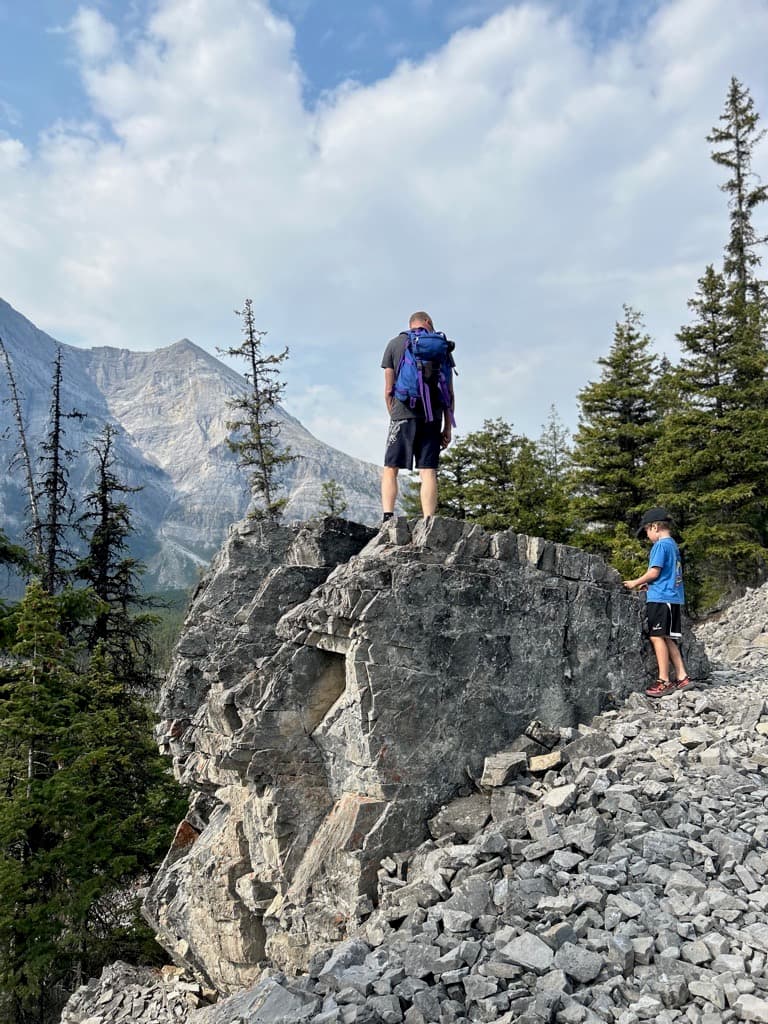
Canadian Rockies in soft light — the slow, patient work of recovery
“I didn't know it at the time, but my nervous system was learning a new baseline.”

What Tai Chi Did for Me

About six months in, my insomnia cleared. Just like that. After months of not being able to sleep, I was suddenly sleeping easily. That was the moment I thought, "Hey, this stuff is actually working."

Over time, the Tai Chi resolved my hip pain entirely. The headaches became more manageable. My relationship with my body started to shift from one of distrust to something more like collaboration. The practice gave me a way to feel what was happening in my body without being afraid of it. I learned to notice tension and pain with curiosity instead of panic.

I kept practicing. I kept progressing. Eventually I started teaching. That practice has been part of my life now for close to 29 years, and it's the foundation underneath everything I do as a psychologist today.

When the Pain Came Back

A couple of years ago, I woke up one morning with significant shoulder pain. Classic onset. Just there when I opened my eyes, no injury, no obvious cause. And it didn't go away. Weeks turned into months, and the pain settled in at about a seven out of ten.

Even with nearly three decades of meditation and somatic practice, I recognized that something deeper was going on. The pain wasn't just in my shoulder. It was connected to that whole right side of my body, the same side that had been giving me trouble since I was 20. The pain shifted, moved around, flared and receded. And that pattern told me something important.

In chronic pain research, when pain appears on one side of the body, moves around, and fluctuates with stress rather than activity, it's a strong indicator of what's called neuroplastic or brain-generated pain. The brain has learned to produce pain signals even though there's no ongoing tissue damage. The pain is absolutely real. The source just isn't structural. It's neural.

Applying Pain Reprocessing Therapy to Myself

By this point, I'd already made the decision that chronic pain recovery was going to be my clinical focus. I was a fully registered psychologist, and I'd begun training in Pain Reprocessing Therapy. The timing was almost too perfect. Here was my own chronic pain demanding that I apply what I was learning.

So I did. I applied the diagnostic criteria and confirmed what I already suspected: this was a neuroplastic condition I'd been carrying for 25-plus years. The shoulder flare-up was just the latest expression of something that had been there since I was 20.

Pain Reprocessing Therapy gave me a structured framework for something my Tai Chi practice had been doing intuitively for decades: changing my relationship to the pain. PRT taught me to approach the sensations with safety and curiosity. To communicate to my brain that these signals weren't dangerous. To calm the threat response, what I think of as activating the soothing system, so the brain could gradually turn down the volume on pain it no longer needed to produce.

The combination of PRT's clinical framework with the parasympathetic foundation I'd built through decades of Tai Chi and meditation was powerful. I could access that calm, grounded state more easily than most. I had nearly 30 years of practice in directing attention to body sensations without fear. PRT gave me the neuroscience to understand why that worked, and a method to apply it with precision.

Amber light tracing pathways — the brain learning a new circuit
“The brain can learn a new baseline. I lived the proof.”

Where I Am Now

About a year and a half into this focused work, my shoulder pain has dropped from a seven out of ten to about a 0.5 on most days. My headaches, which I'd been managing with Advil and Tylenol for years, have responded to the same approach. I rarely take pain medication anymore. It's been that effective.

I've learned to recognize what triggers pain flare-ups, and when one does arise, sometimes a shoulder twinge out of nowhere, I have the skills to respond to it rather than react. I can recognize it as brain-generated, communicate safety to my nervous system, and watch the flare settle. It's not magic. It's practice.

And that's really the point. Having this capacity, this tool in my toolbox, means I don't need the external safety mechanisms I depended on for most of my life. I don't need the Maalox in the bag. I don't need the Advil just in case. I trust my ability to handle whatever comes up. For someone who spent 25 years never leaving home without a pharmacy in his carry-on, that's a pretty significant change.

What I See in My Clients

One of the things I find most meaningful in this work is a pattern I see over and over again. Someone comes in with a specific complaint, maybe lower back pain. We start doing the work. The Pain Reprocessing Therapy begins to help with the back pain. And then something clicks.

They start looking back at their own history. They remember the stomach problems in high school. The tension headaches that became "normal." The irritable bowel syndrome they'd been managing for years without questioning it. They start to see a pattern they'd never noticed before, that these weren't separate conditions. They were all expressions of the same underlying neuroplastic process.

And then they start generalizing the skills. They apply what they've learned about back pain to the headaches, to the gut issues, to the jaw clenching. The skills transfer. Their confidence grows. And what I witness in that process, that moment where someone moves from feeling helpless about their pain to feeling empowered by their own ability to change it, that's something I feel deeply fortunate to be part of.

I know what it looks like because I lived it. The 14-year-old packing antacids didn't know he had a chronic pain condition. It was just normal. If you've ever felt that way, like pain and discomfort are just your baseline, just something you manage, I want you to know that it doesn't have to be.

Recovery is real. I'm living proof of it.

Wondering if Pain Reprocessing Therapy could help you?

Book a free 20-minute consultation. No pressure, just a conversation about what you're going through and whether this approach might be right for you.

Book Free Consultation